
Category
Recent Posts
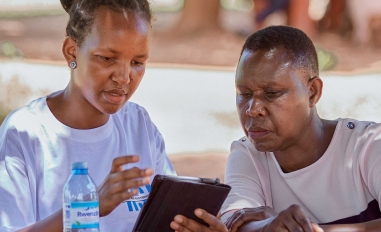
In Mayuge District, the stats paint a stark picture: an HIV prevalence of 7%, higher than the national average of 6.2%, and a teenage pregnancy rate at a staggering 27%, far surpassing
Uganda’s 23% national rate (UDHS, 2019). Many of these young girls face a lifetime of challenges, including dropping out of school, social stigma, and abandonment by their families or the men who made them pregnant. These vulnerabilities are often driven by high-risk sexual behaviors, including early sexual experiences, transactional relationships with “sugar daddies,” and low awareness of HIV and pregnancy prevention.
But what if there was a way to better protect these girls? That’s where Muwala comes in. Named after the Luganda word for “girl,” Muwala is an AI prototype focused on guiding Ugandan girls, especially those most vulnerable, to make informed decisions about their health and future.
The Heart Behind Muwala
Muwala was designed with one mission: to empower girls through personalized risk assessments, giving them the information they need to make safer choices. Still in its prototype stage, Muwala has been developed with data from over 200 girls, each one helping to refine the system’s ability to assess risk factors like cross-generational relationships, emotional well-being, and the likelihood of early pregnancy. By providing personalized risk scores for pregnancy, school dropout, and involvement in relationships with older men, Muwala doesn’t just highlight risks; she offers practical tips.With a current accuracy of 94% for pregnancy risk and 96% for dropout risk, Muwala is bringing a whole new world of change to the girls.
The Technology Powering Muwala
Behind the scenes, Muwala’s intelligence relies on machine learning models, with algorithms like CatBoost helping fine-tune her ability to assess risks with precision. She analyzes key factors impacting each risk category, using data that’s been cleaned and organized for maximum reliability. And while Muwala’s current response time averages around 20 seconds, our team is working to streamline this further.
With a backend powered by Django and a user-friendly interface built on Next.js, Muwala is set to become more accessible and intuitive. The ultimate goal? To introduce offline capabilities, making Muwala a tool that girls across Uganda can access, even in remote regions where internet connections are scarce.
Challenges and Learning on the Ground
Developing Muwala hasn’t been without hurdles. The early outreach efforts revealed the difficulty of reaching out-of-school girls, particularly in remote villages. Our initial questionnaires were lengthy, making it challenging for some participants to stay engaged. However, through feedback from field facilitators and adjustments to the survey’s length, we were able to adapt, bringing Muwala closer to the needs of her target audience.
A Vision for the Future
Muwala isn’t just an AI tool; she’s a promise. She embodies the belief that every Ugandan girl deserves the right to education, to understand her body, and to make choices about her future. As we continue developing Muwala, we aim to refine her capabilities, reduce her response time, and expand her reach. By partnering with other organizations, we hope to bring Muwala’s to more girls across Uganda, guiding them toward safer, healthier choices.
To make this vision a reality, we invite donors, Civil Society Organizations (CSOs), and community leaders to join hands with us. Through partnerships, we can take Muwala further, expanding her reach and ensuring that even more girls have the support they need to shape a safer future. Together, we can help protect the next generation and transform communities across Uganda.
With Muwala, we’re not just providing information, we’re paving the way for girls across Uganda to rewrite their futures.